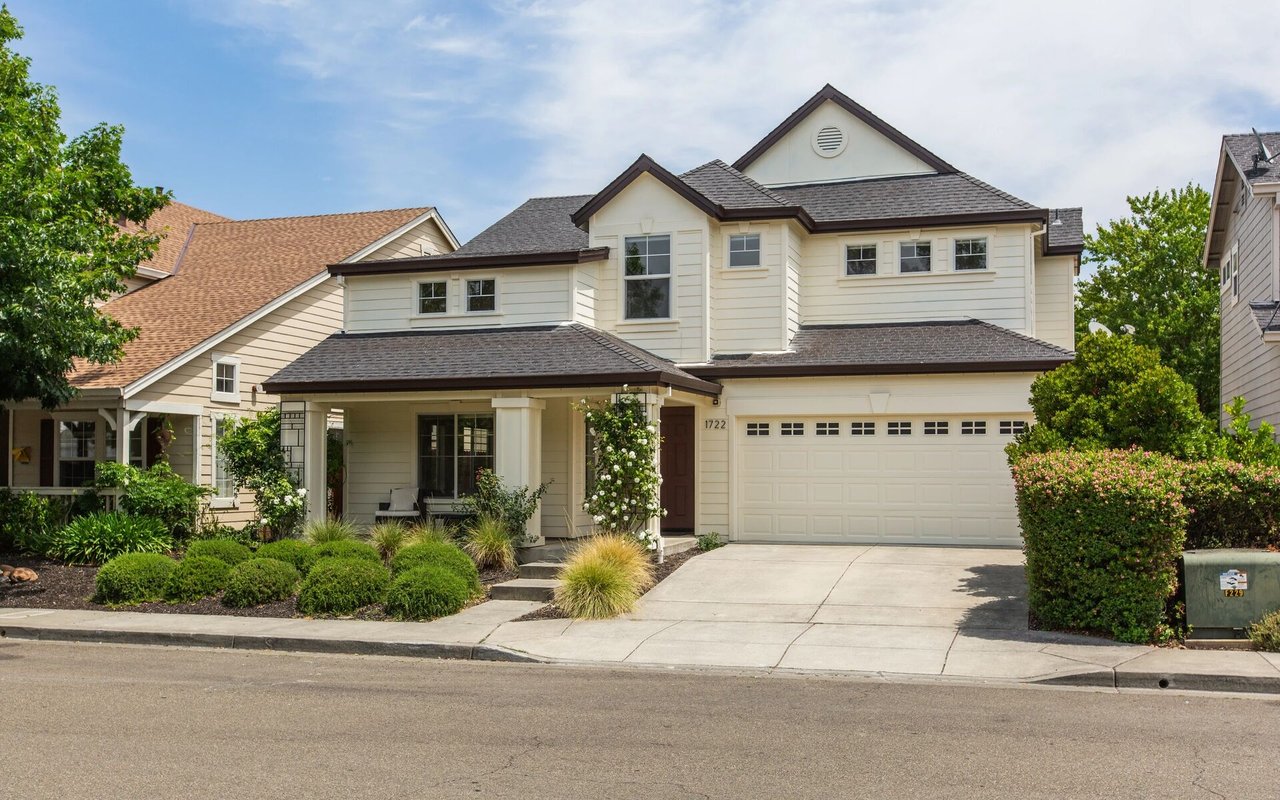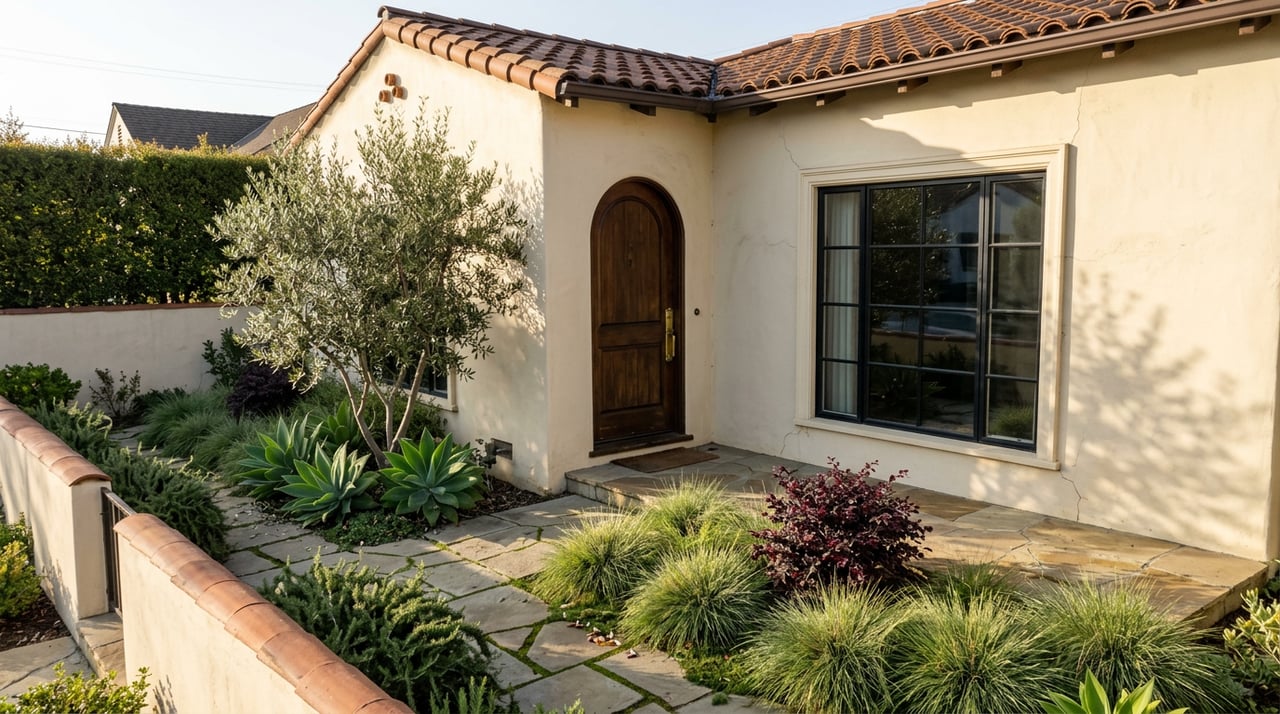
If you've toured a Craftsman or Spanish Revival near the Plaza this year, you've probably heard the pitch: this one has a Mills Act contract, so the property tax bill runs well below what the assessed value would suggest. It's true, and it's also the least useful thing you can know about that contract right now.
Here's what the pitch usually leaves out. The City of Orange has not been accepting new Mills Act applications since 2025. The program's own page states plainly that the city is "not presently accepting Mills Act applications for 2025 while the program is under review." As of the Old Towne Preservation Association's January 2026 update, the city still had not given a timeline for when applications might reopen. So if you're picturing yourself applying for a Mills Act contract on some other historic property you love that doesn't already have one, that path is closed for now, not delayed by paperwork but paused indefinitely while the city sorts out how it wants to run the program.
That's the smaller story. The bigger one is what's happening to the roughly 200-plus properties that already have contracts.
The Letter That Shouldn't Have Gone Out
In August 2025, the city mailed a compliance letter to every Mills Act contract holder in Orange. It did not land well. The Old Towne Preservation Association, working alongside the Orange Legacy Alliance, met with the city's Community Development Department afterward, and staff acknowledged the letter "should not have been mailed out." It caused confusion rather than clarity about who was actually out of compliance and why.
The city is now sending a second, more targeted round of letters, this time aimed specifically at contract holders identified as out of compliance, starting with owners who haven't paid their required annual filing fee. OTPA's January 2026 update put the number of flagged properties at roughly 40. That's not a rounding error in a city with a few hundred contracts. It's a meaningful share of the enrolled inventory, currently under active scrutiny, at the exact moment the city has frozen the front door to new applicants.
If you're buying in Old Towne Orange right now, that combination is the thing worth understanding before you write an offer, not after.
What Actually Transfers at Closing
A Mills Act contract is recorded against the property, not the person who signed it. California's Office of Historic Preservation is explicit about this: the contract runs with the land, and a new owner is bound by the same rights and obligations as the original signer. You don't renegotiate it. You step into it.
What you step into includes:
- A minimum 10-year term with automatic yearly renewal, so it doesn't expire on a schedule you control
- An annual reporting requirement on maintenance and repairs to the historic property
- A 10-year rehabilitation plan that has to be updated on that same cycle
- A cancellation penalty of 12.5 percent of the property's full value if the contract is terminated before the term runs out
None of that shows up as a line item on a listing sheet. It shows up in the contract file at the Community Development Department, and right now, with the city actively sorting out which of its 200-plus contracts are current on filing fees and which aren't, that file is worth requesting before you're in contract, not during your contingency period.
What Buyers Assume Versus What's Actually True Right Now
| What a listing implies | What's actually the case in 2026 |
|---|---|
| "Mills Act eligible" means you can apply for the savings | New applications are frozen citywide with no stated resumption date |
| The tax savings are the whole story | The contract also carries a 10-year maintenance commitment and annual reporting duty |
| An existing Mills Act contract is a clean, static perk | The city is actively auditing compliance, with about 40 properties flagged as of January 2026 |
| Ending the contract early just means losing the discount | Early cancellation triggers a penalty of 12.5 percent of full property value |
| The tax benefit is separate from renovation rules | Any exterior work still goes through the city's Design Review Committee, whether or not the home carries a Mills Act contract |
That last row matters beyond the tax question. Old Towne's historic district layers a design review requirement on top of the Mills Act program, and the two are easy to conflate. A home doesn't need a Mills Act contract to fall under Design Review Committee jurisdiction. Every exterior change inside the historic boundary, roughly the area bounded by Walnut, Cambridge, Almond, and Center around the Plaza, goes through that review regardless of whether the owner is claiming a tax reduction. Buyers planning any exterior remodel, an addition, or an accessory dwelling unit should expect that review to add both time and cost to the project, on top of whatever the Mills Act contract itself requires in terms of preserving original materials and features.
Why the Freeze Is the Part With Real Market Weight
Here's the part that changes how you should think about pricing a Mills Act home in this market. With new applications paused, the number of Mills Act properties in Orange is fixed at whatever it was when the freeze took effect. It can't grow. Every property that already holds a compliant, in-good-standing contract is drawing from a supply that the city is not currently allowing to expand.
That's a different situation than the one buyers usually picture, where Mills Act status is a nice-to-have that any qualifying historic home could eventually get. Right now it's closer to a closed pool. A property with a documented, current, compliant Mills Act contract carries a benefit that a comparable historic home without one simply cannot acquire this year, no matter how eligible it looks on paper. That scarcity is worth factoring into how you compare two similar historic listings, one with a contract in good standing and one without.
The flip side cuts the other way. A property with a Mills Act contract that turns out to be one of the roughly 40 flagged for compliance issues isn't carrying that same clean value. It's carrying a liability you'd inherit at closing, potentially including back fees or a compliance process you'd be responsible for resolving as the new owner.
What This Means for Your Escrow
If you're under contract or about to be, ask for three things before your contingency period runs out: a copy of the recorded Mills Act contract, the most recent annual report the seller filed, and confirmation of the property's standing with the city's Historic Preservation division. The staff contact for Mills Act questions is Michelle Dulalia in the Community Development Department, and OTPA's public guidance specifically recommends property owners reach out with any compliance questions and keep a written record of that correspondence.
If you're selling a Mills Act property, get ahead of this. A buyer's agent doing their homework in 2026 is going to ask about compliance status. Having your annual reports current and your paperwork in order before you list isn't just good practice, it's the difference between a smooth escrow and a renegotiation over an unresolved compliance letter.
Frequently Asked Questions
Does the application freeze affect homes that already have a Mills Act contract? No. The freeze applies to new applications only. Existing contracts continue under their original terms, including the automatic renewal structure, regardless of whether the city is accepting new enrollees.
If I buy a home with a Mills Act contract that's out of compliance, am I responsible for fixing it? The contract transfers to you as the new owner along with its existing rights and obligations. Any compliance issue attached to the property, including unpaid filing fees, becomes something you'd need to resolve after closing. This is exactly why verifying status before you close matters.
Can I buy a historic Old Towne Orange home if it doesn't have a Mills Act contract? Yes, and given the current freeze, that's true for the near future of any historic property that isn't already enrolled. You'd still be subject to Design Review Committee oversight for exterior changes, since that requirement is tied to the historic district itself, not to Mills Act participation.
A Mills Act line on a listing used to be a simple selling point. In 2026, it's a document worth reading before you fall in love with the porch. If you're comparing historic properties in Old Towne Orange, whether you're weighing a Mills Act home against one without a contract, or trying to understand what a compliance flag means for a property you're already interested in, Adrian Langley can walk through the contract details and financing implications with you directly. Schedule a consultation before you write an offer, not after.