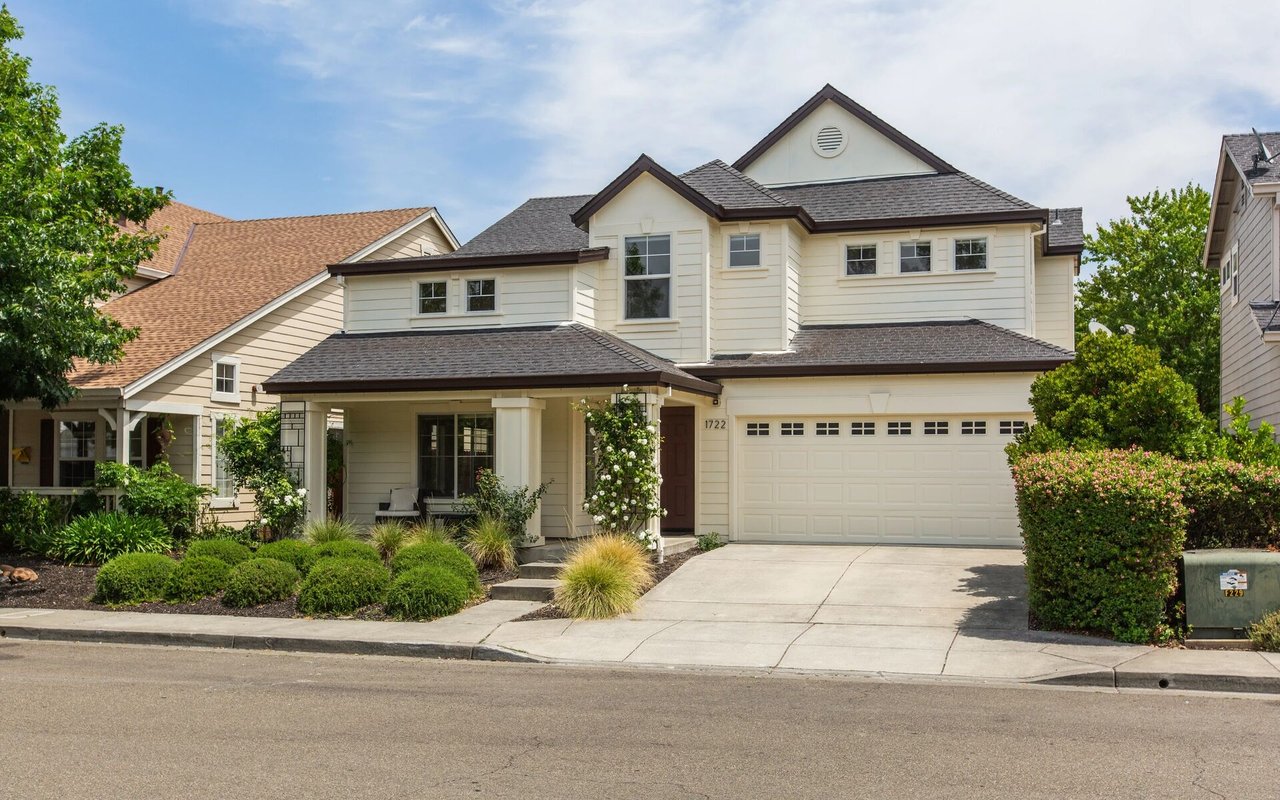
North Tustin is unincorporated, which means the County of Orange decides what can be built there. On a large lot, much of what a buyer pays for is the chance to expand later, and the County, state law and sometimes a private covenant signed decades ago all control that chance. In 2026, County planning files show one application after another testing those limits, one parcel at a time.
Take a September 16, 2026 County staff memo about 13661 Hewes Street. The property is a 2,264-square-foot single-story home built in 1935, on an irregular lot of about 29,957 square feet. The applicant proposes adding a 1,288-square-foot first-floor addition, a new 1,195-square-foot second floor, and a 1,160-square-foot attached three-car garage with storage and workshop space. The zone requires side yards of 13 feet 6 inches. The request asks for 5 feet 2 inches on the north side and 10 feet 5 inches on the south. At nearly 30,000 square feet, the lot looks like it has plenty of room. Under the zoning rules, it doesn't, at least not where the proposed additions would go.
The Side Yard Is Where the Plan Meets the Code
The Hewes Street parcel is zoned 100-E4 "Small Estates." County staff describe this as a district with a minimum lot width of about 100 feet. In the Orange County Zoning Code, E4 parcels have a 35-foot height limit and can cover no more than 35% of the site. Front setbacks are 30 feet and rear setbacks are 25 feet. Side setbacks are 10% of the lot's average ultimate net width, capped at 20 feet.
Because the side yard is a percentage of width, it grows as the lot gets wider. A wide lot comes with wide required side yards, so a large parcel can still have a fairly narrow area where a house can go. On an irregular lot like the one on Hewes Street, the buildable area can come out smaller than the acreage suggests.
The Hewes Street request is a variance, which is a discretionary approval. The County can grant one only if it finds two things. First, special circumstances on the site must deprive it of privileges that similar properties have under strict application of the code. Second, the approval must not grant a special privilege. Staff recommended that the Zoning Administrator approve it and cited the irregular shape of the lot. That is a recommendation and not yet a decision. Either way, a buyer who assumes an addition will fit within the code may find that it needs a variance like this one.
The Hewes Street lot is also not governed by every North Tustin rulebook. The North Tustin Specific Plan has its own residential single-family district. It sets a 10,000-square-foot minimum building site, 25-foot front and rear setbacks, the same 10%-of-width side-yard formula capped at 20 feet, a 35-foot height limit, and maximum coverage of 50% of the building site. The Specific Plan map lists RSF, RMF, RGO, PQP and OSR districts, and E4 is not one of them. So two North Tustin lots of the same size can have different coverage limits, 35% or 50% of the site, depending on which designation the parcel carries. The listing shows the square footage and does not show the designation.
Who Actually Says Yes
When a North Tustin proposal is discretionary, the first public stop is usually the North Tustin Advisory Committee. NTAC has seven voting members appointed by the County Board of Supervisors. Its bylaws give five seats to the Third Supervisorial District and two to the Second, and members generally live in North Tustin. NTAC reviews subdivision maps, site plans, use permits and variances, but its recommendations are advisory and nonbinding. It is scheduled to meet at 7 p.m. on the third Wednesday of each month.
The June 2026 agenda shows the range of what comes before the committee. It included a replacement retaining wall and fence at 11651 Marble Arch Drive and a rear-yard deck about 13 feet tall at 19246 Fairhaven Extension, both requiring use permits. It also included a full subdivision. Tentative Tract Map 19317 proposes dividing about 1.72 acres at 12612 Lemona Lane into four single-family lots, plus a fifth lot, Lot A, for a private road. The site currently has a single-story home of about 3,876 square feet, built in 1956.
The Lemona Lane memo shows that a large North Tustin lot goes through several separate approvals before new homes can exist:
- NTAC reviews the map and sends a recommendation to the County Subdivision Committee.
- The Subdivision Committee decides on the tentative tract map.
- The private road, utilities and drainage go through their own review. This proposal includes about 120 cubic yards of cut-and-fill grading for the road.
- Each future house needs separate review for County zoning, building, grading, drainage and fire authority requirements.
The private road is also something an owner pays for. Under the proposal, Lot A would be maintained privately. Whoever later buys one of those four lots would share responsibility for the road that serves it.
The State Built a Faster Lane, With Its Own Conditions
The variance and the tract map are both discretionary. State law has created separate ministerial paths, where approval depends on meeting objective standards and not on a hearing.
| Path | How it is decided | Key conditions | Source date |
|---|---|---|---|
| Detached ADU | Ministerial permit | Up to 1,200 sq ft; 4-ft side and rear setbacks | County flyer, January 2026 |
| Attached ADU | Ministerial permit | Up to 50% of the primary home's area, capped at 1,200 sq ft; 800 sq ft cap when sited in a setback area | County flyer, January 2026 |
| SB 9 lot split | Ministerial; decision within 60 days of a complete application | Resulting lots at least 1,200 sq ft; three-year owner-occupancy affidavit; no more than two units per resulting parcel | HCD fact sheet, April 2026 |
| Variance or tract map | Discretionary, with NTAC review | Required findings or Subdivision Committee approval | County memos, June and September 2026 |
Under the County's January 2026 ADU flyer, a single-family lot can have one detached ADU, one converted ADU and one junior ADU in addition to the main house. The four-foot ADU setbacks are much smaller than the 13-foot-6-inch side yard required for the main house on Hewes Street. On a wide E4 lot, an ADU can therefore sit in places the main house cannot.
SB 9 applies only on qualifying parcels. HCD's April 2026 fact sheet says it is generally limited to single-family zones in urbanized areas. It also excludes several categories, including tenant-occupied housing, historic resources, and specified protected or hazardous land. The County's own SB 9 handout dates from April 2022. Later state laws, SB 450 and AB 1061, have changed the rules since then, so the handout is no longer the full picture. Whether a particular lot qualifies depends on that parcel.
The Rule That Isn't in Any Code
The last layer of rules is usually found in the title report. The dispute over the Tustin Hills Racquet Club shows how much weight it can carry.
According to the Foothill Communities Association, the club opened in 1958 on about six acres. For decades it shared the half-acre-lot zoning of the 118 homes in surrounding Tract 3883. In the early 1970s, the club wanted to expand and applied to rezone to A-1 Agriculture. FCA says the County would not approve the rezone without the tract's agreement. The result was a covenant, recorded in 1974, limiting how the site could be redeveloped if the club ever closed.
Ranch Hills Partners bought the club before the pandemic and proposed replacing it with 37 condominiums. The Foothills Sentry reported in December 2023 that the Board of Supervisors approved 37 homes on 5.88 acres. Two lawsuits followed. FCA challenged the County's approval under the state Housing Accountability Act, and nearby residents sued Ranch Hills Partners over the 1974 covenant. FCA's July 2026 update says both cases are still pending. It also says Californians for Homeownership and the California Housing Defense Fund were allowed to join the covenant case. In FCA's description, that widened the question to whether recorded covenants of this kind conflict with state housing policy. We found no court ruling for either case in the sources we reviewed.
State law has already changed how much certain covenants can do. HCD says CC&Rs cannot effectively prohibit or unreasonably restrict ADUs or junior ADUs on lots zoned for single-family use. AB 1050, took effect January 1, 2026. It extended an existing covenant-modification process to qualifying projects that redevelop existing commercial property with residential uses. The process requires review by county counsel and a recorded modification document. The law keeps general plan and zoning consistency requirements in place. Whether it applies to a recreational site zoned A-1 depends on the facts of that site and has not been decided.
For a North Tustin buyer, this means two lots with the same zoning can differ in what can be built on them. One may have a recorded agreement that limits subdivision, and the other may not. State law now overrides some of those agreements but not all of them.
Where These Layers Surface in a Transaction
Orange County prices are high enough that these questions are worth asking before an offer. In August 2026, the California Association of Realtors reported a median sale price of $1,452,500 for existing single-family homes in the county, up 4.9% from a year earlier. The median home sold in 27 days. C.A.R. notes that changes in the median partly reflect which homes happened to sell. In North Tustin, the bigger difference between two homes at the same price is often what each lot is allowed to become.
That information is spread across documents a buyer can read before closing. The parcel's designation shows whether E4 or Specific Plan standards apply. The lot's average width sets its side yards. The title report shows any recorded covenants. NTAC agendas show what has recently been proposed nearby. For a home near Tustin's edge, the Tustin neighborhood page covers a city where a city government makes these decisions. Our North Tustin overview and buyer guide cover the rest of the purchase process.
If you are pricing a North Tustin home based on what the lot could become, Adrian Langley at Skymark Real Estate Group can go through the parcel's zoning designation, setbacks and title documents with you before you make an offer, so your valuation matches what the rules allow. Schedule a consultation to review a specific address.
This article is general information, not legal, tax or financial advice. Consult a qualified professional about your situation.